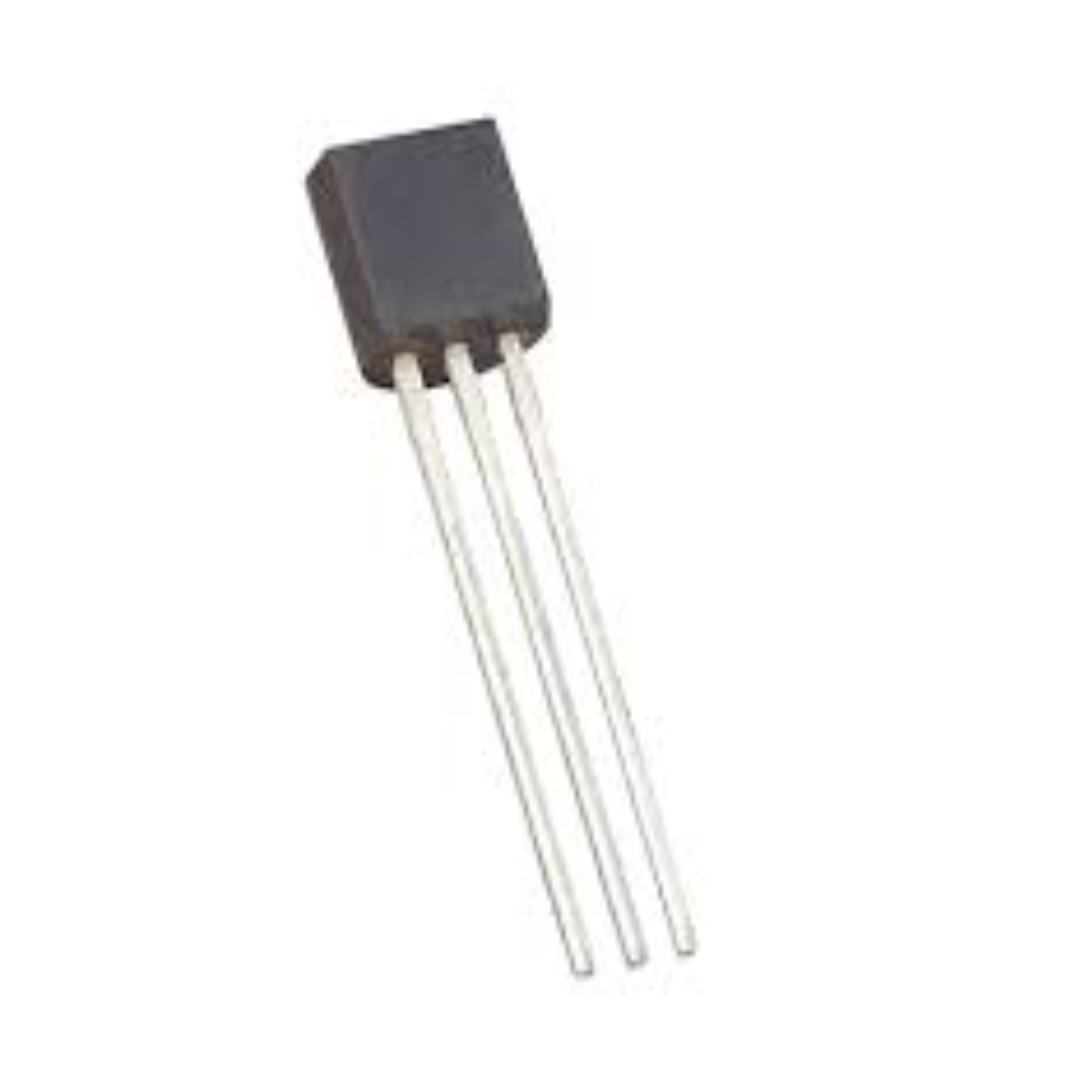
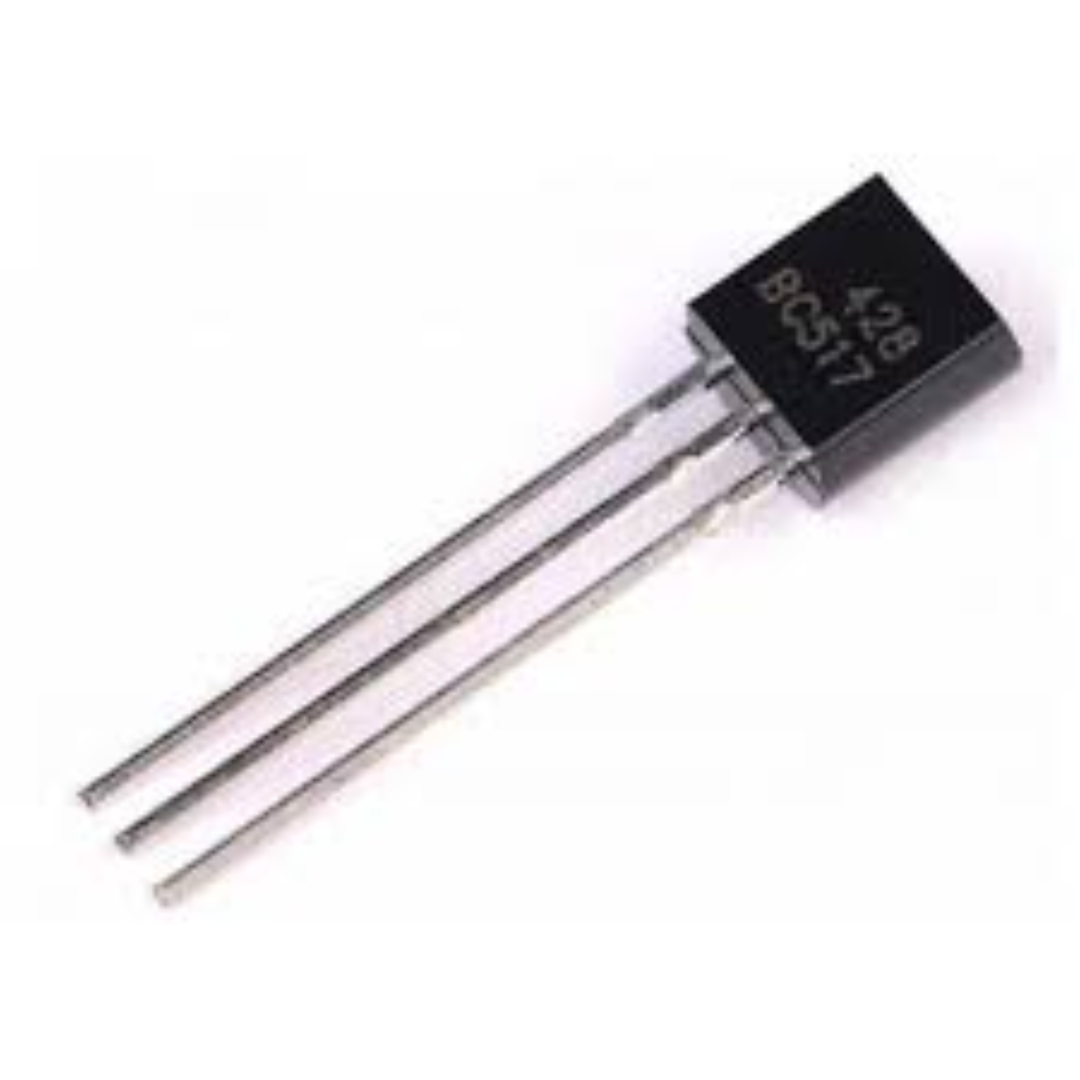
Darlington Transistors are semiconductor devices that combine two bipolar junction transistors (BJTs) in a single configuration to achieve very high current gain. In this arrangement, the emitter of the first transistor is connected to the base of the second, so the overall current gain is the product of the gains of both transistors.
They are widely used in high-current switching and amplification applications where a small input current needs to control a much larger load current. Common applications include relay drivers, motor control circuits, power regulators, audio amplifiers, and actuator drivers.
Key characteristics of Darlington transistors include extremely high current gain (β), high input impedance, higher base-emitter voltage (typically around 1.2–1.4 V), slower switching speed compared to single BJTs, and higher saturation voltage. They are available as discrete pairs or integrated Darlington transistor packages, in through-hole and surface-mount formats.