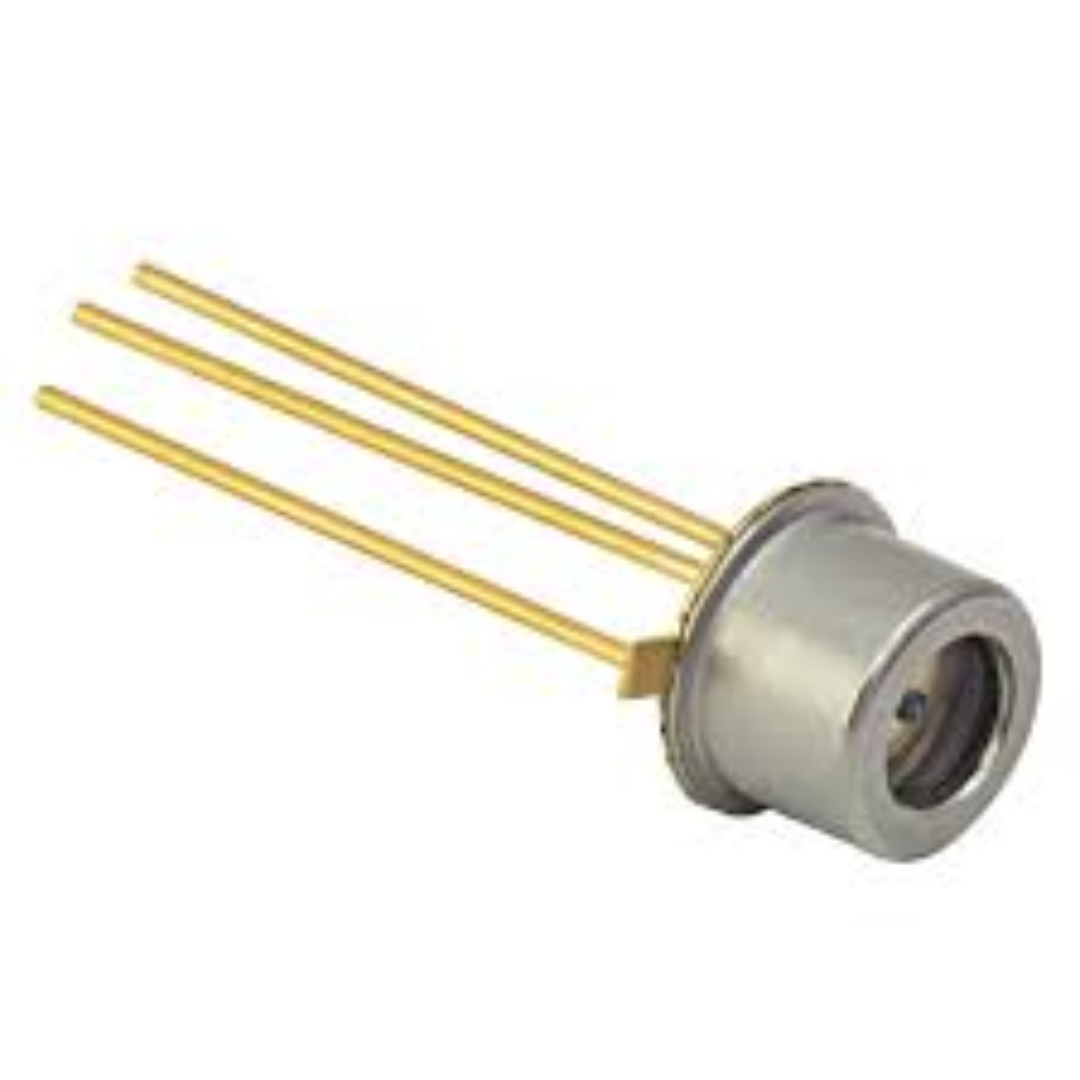
Photodiodes are semiconductor devices that convert light into electrical current. When exposed to light, photons generate electron-hole pairs in the semiconductor material, producing a current proportional to the light intensity. This makes photodiodes essential for light sensing and optical detection applications.
They are widely used in optical communication systems, light meters, safety sensors, medical devices, barcode scanners, solar cells, and infrared detection. Photodiodes can operate in photovoltaic mode (generating voltage when illuminated) or photoconductive mode (changing current under reverse bias), depending on the application requirements.
Key characteristics include spectral response (wavelength sensitivity), responsivity, dark current, response time, capacitance, and package type. They are available in through-hole, surface-mount (SMD), and specialized optoelectronic packages.