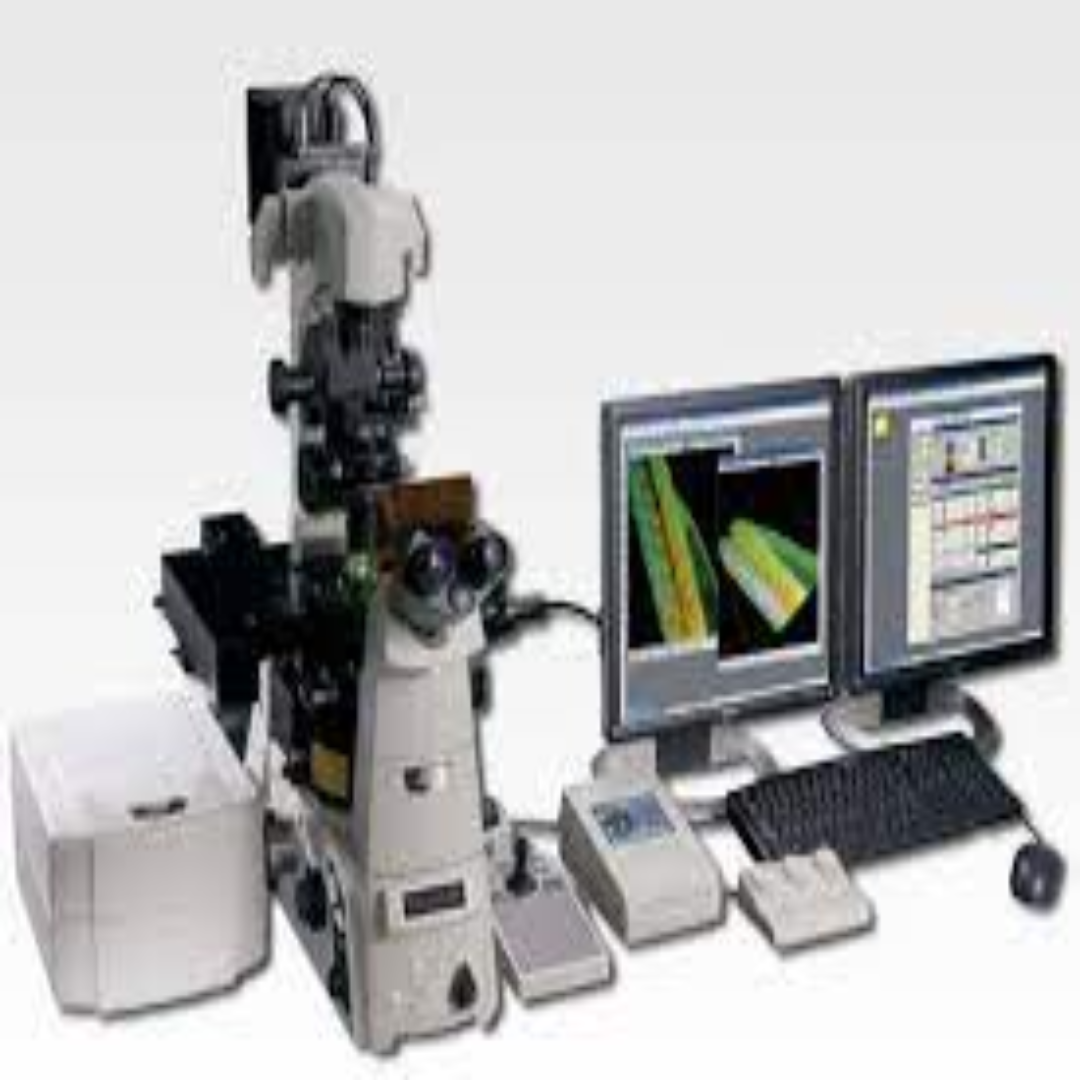
Swept-Field Confocal Microscopes are versatile fluorescence imaging systems that combine features of point-scanning and spinning disk confocal designs. Instead of illuminating the sample point by point or with a full disk of pinholes, they use a movable slit or a partial array of pinholes that is rapidly swept across the specimen. This approach allows faster image acquisition than laser scanning confocal microscopes while offering better light collection efficiency and sectioning capability compared to spinning disk systems.
These microscopes are well-suited for live-cell imaging, dynamic cellular processes, and low-light specimens because they balance speed, sensitivity, and resolution. They also minimize photobleaching and phototoxicity, making them effective for long-term imaging of fragile samples. Swept-field confocal systems are commonly used in cell biology, developmental biology, and neuroscience research where both temporal resolution and optical sectioning are critical.