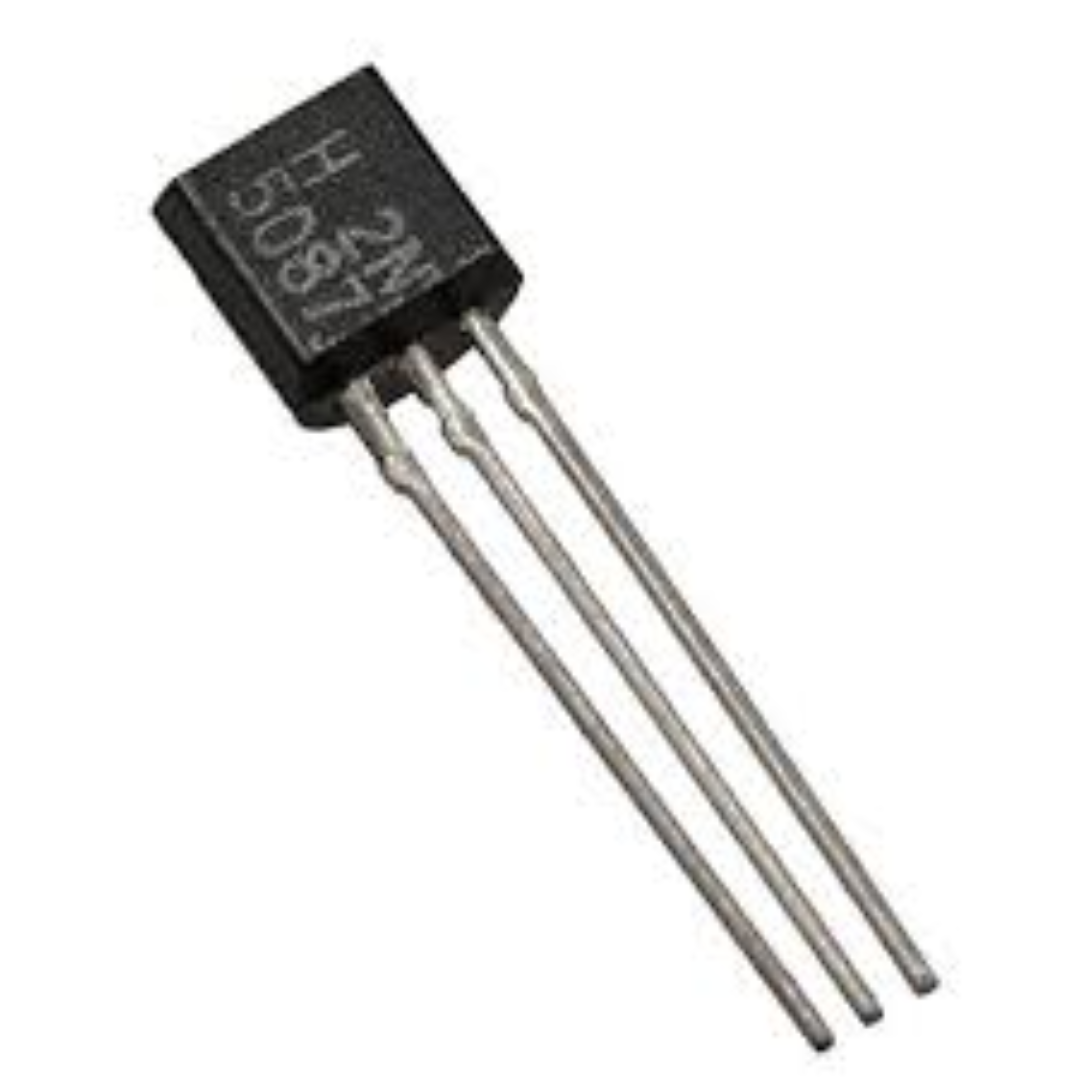
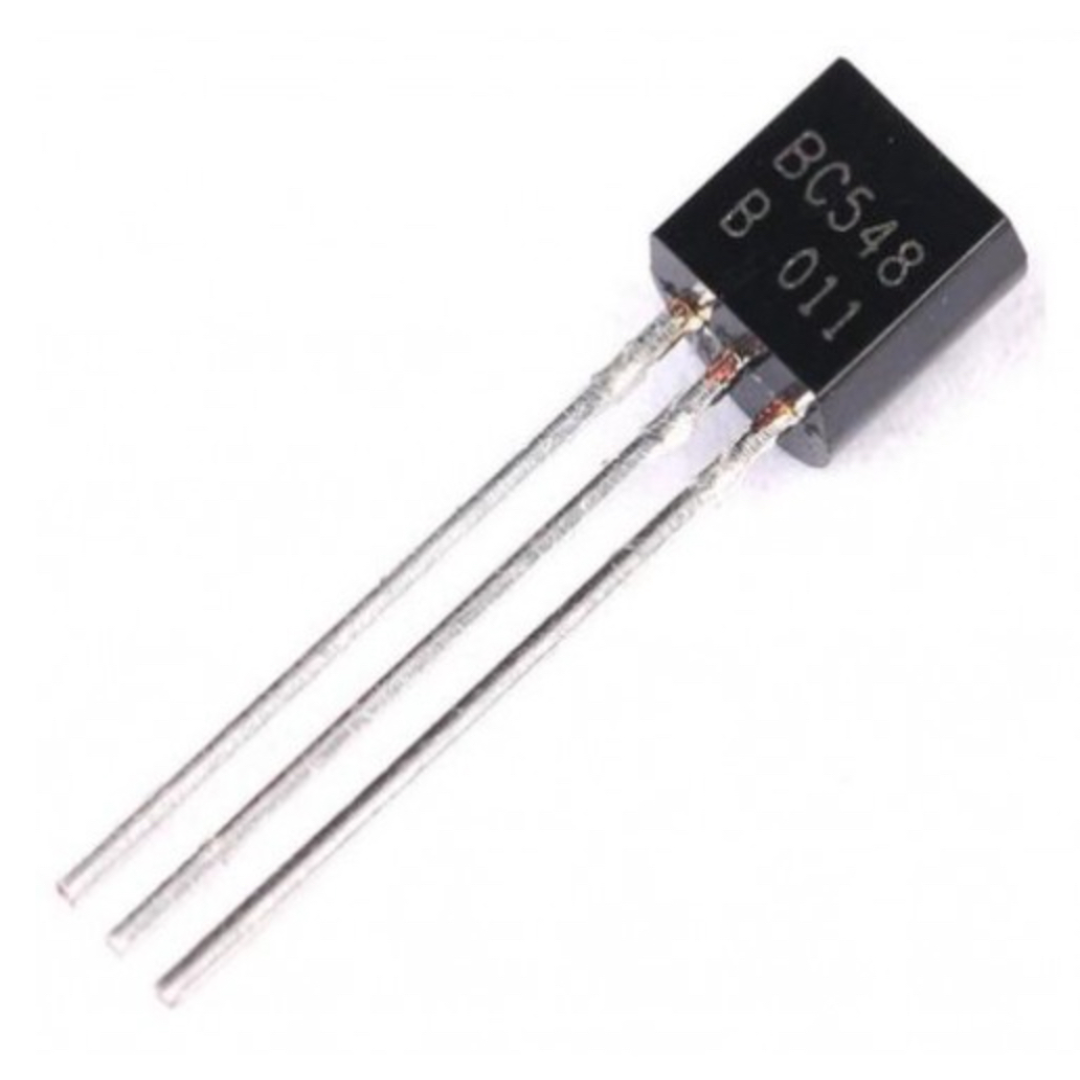
Bipolar Junction Transistors (BJTs) are semiconductor devices that amplify or switch electrical signals by controlling current flow between two terminals (collector and emitter) using a small current at a third terminal (base). They are called “bipolar” because both electrons and holes participate in conduction.
BJTs are widely used in amplifiers, switching circuits, oscillators, signal modulators, and digital logic circuits, where precise control of current and voltage is required. They come in two types: NPN and PNP, which determine the direction of current flow and biasing requirements.
Key characteristics include current gain (β or hFE), maximum collector current, collector-emitter voltage, power dissipation, transition frequency, and package type. BJTs are available in through-hole and surface-mount (SMD) packages.