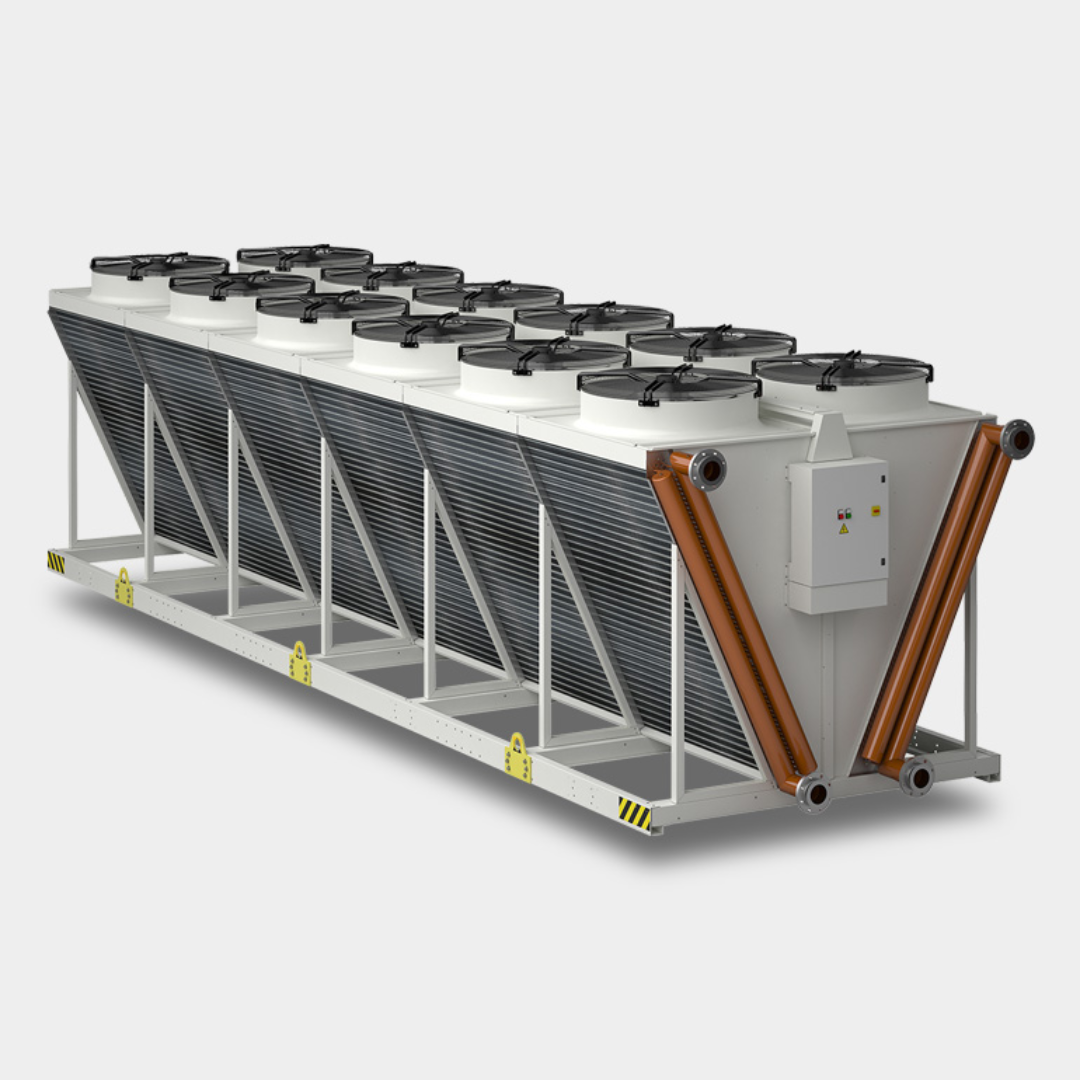
A Process Cooling System is an industrial setup designed to remove unwanted heat from manufacturing processes, machinery, or products to maintain optimal operating conditions. These systems are widely used across industries like plastics, chemicals, pharmaceuticals, food & beverage, metalworking, and power generation. By maintaining controlled cooling, they help improve product quality, extend equipment life, and ensure process reliability. Cooling can be achieved using water, air, or refrigerant-based chillers, with heat ultimately dissipated to the atmosphere via cooling towers, dry coolers, or evaporative condensers.
Key Features of Process Cooling Systems
Efficient Heat Removal – Maintains precise temperature control for equipment and processes.
Flexible Configurations – Available in air-cooled, water-cooled, and hybrid designs.
Energy Efficiency – Advanced models use variable speed compressors, pumps, and fans to reduce energy use.
Scalability – Modular units allow expansion to meet higher cooling loads.
Reliability – Designed for continuous operation in demanding industrial environments.
Environmental Options – Can use eco-friendly refrigerants and optimized water usage.
Integrated Controls – Digital monitoring and automation ensure consistent temperature and fault protection.