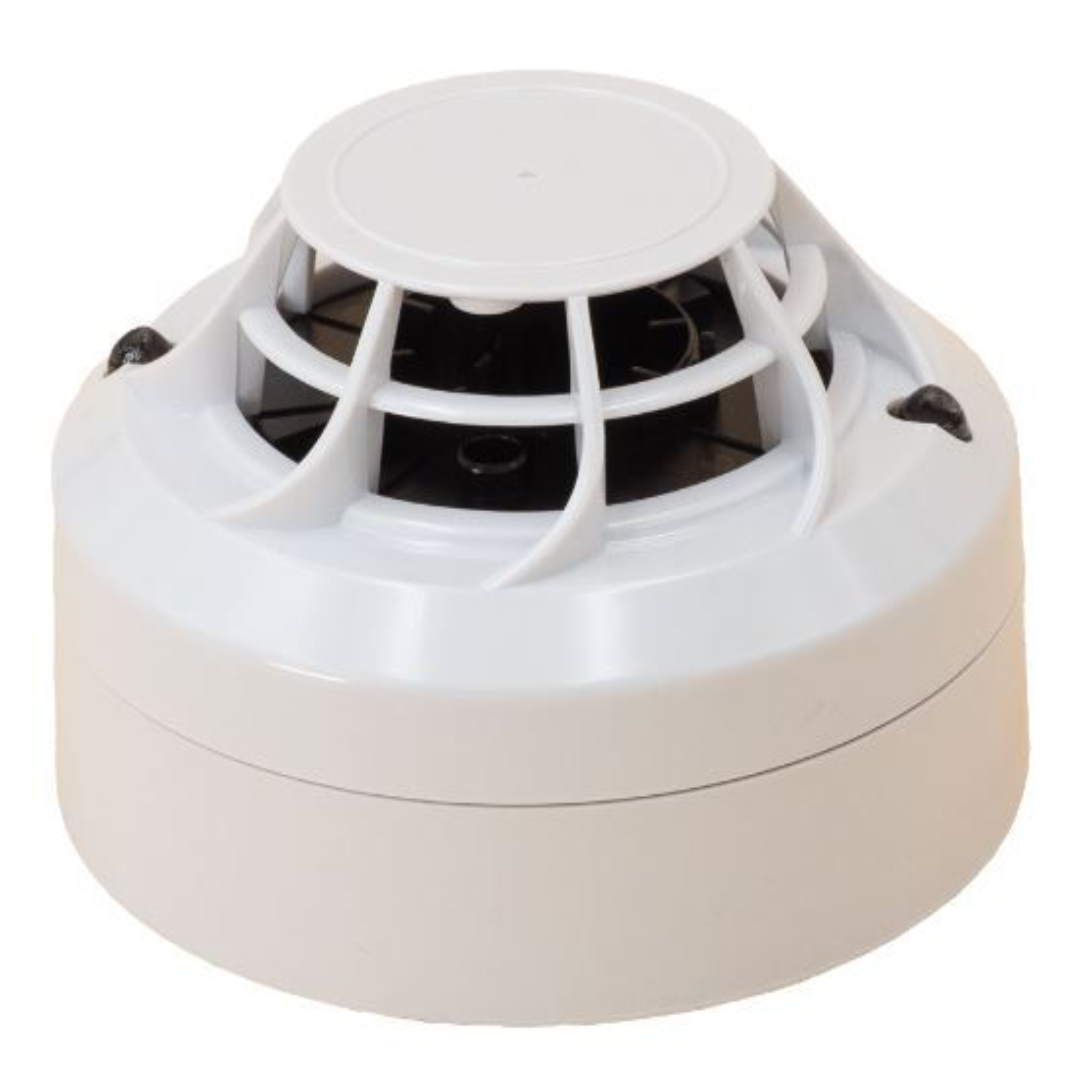
Heat detector sensors are essential components of fire detection systems, designed to sense the presence of fire by monitoring changes in temperature. Unlike smoke detectors, which respond to airborne particles, heat detectors react to thermal energy, making them ideal for areas prone to dust, steam, or cooking fumes that could trigger false alarms. They come in various types, including fixed temperature detectors that activate when the ambient temperature reaches a set threshold, rate-of-rise detectors that respond to rapid temperature increases, and combination detectors that incorporate both methods for broader coverage. Operating through thermistors, thermocouples, or other sensing elements, these sensors trigger alarms when temperatures exceed safe levels, enabling timely responses to fire hazards. Commonly used in kitchens, garages, warehouses, and industrial environments, heat detectors provide reliable fire protection where smoke detectors may be less effective, ensuring safety in a variety of settings.