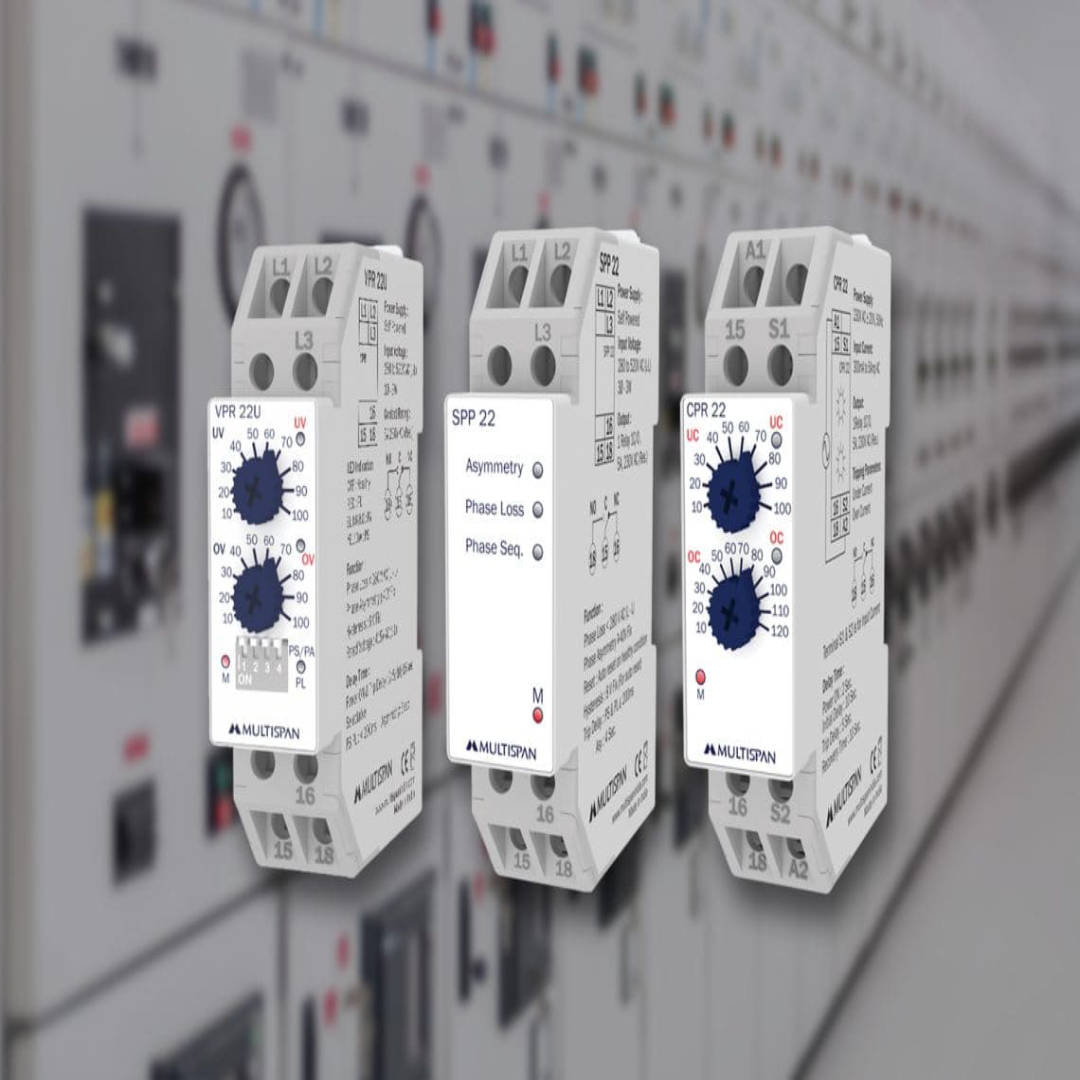
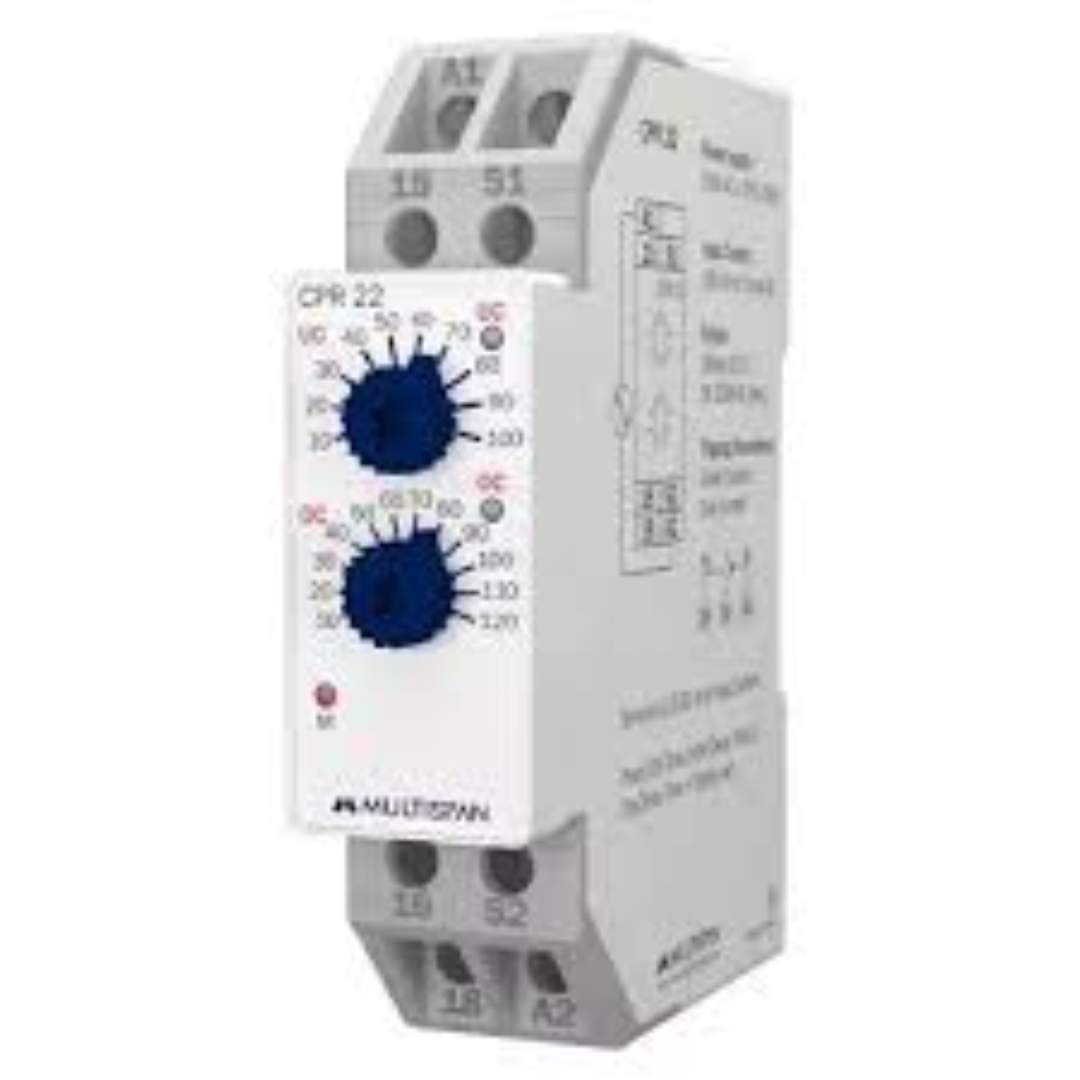
Protective relays are specialized electrical devices designed to detect abnormal or fault conditions in power systems and initiate corrective actions to protect equipment and ensure system safety. They continuously monitor parameters such as current, voltage, frequency, power, and phase angle, and operate when these values exceed preset limits.
When a fault such as overload, short circuit, earth fault, or voltage imbalance occurs, the protective relay sends a trip signal to circuit breakers or isolation devices to disconnect the affected part of the system. This helps prevent damage to generators, transformers, motors, transmission lines, and other electrical equipment.
Protective relays are widely used in power generation, transmission, and distribution networks, as well as in industrial plants and substations. Modern protective relays are often digital or numerical, offering high accuracy, fast response, self-diagnostics, communication capabilities, and improved reliability compared to traditional electromechanical relays.