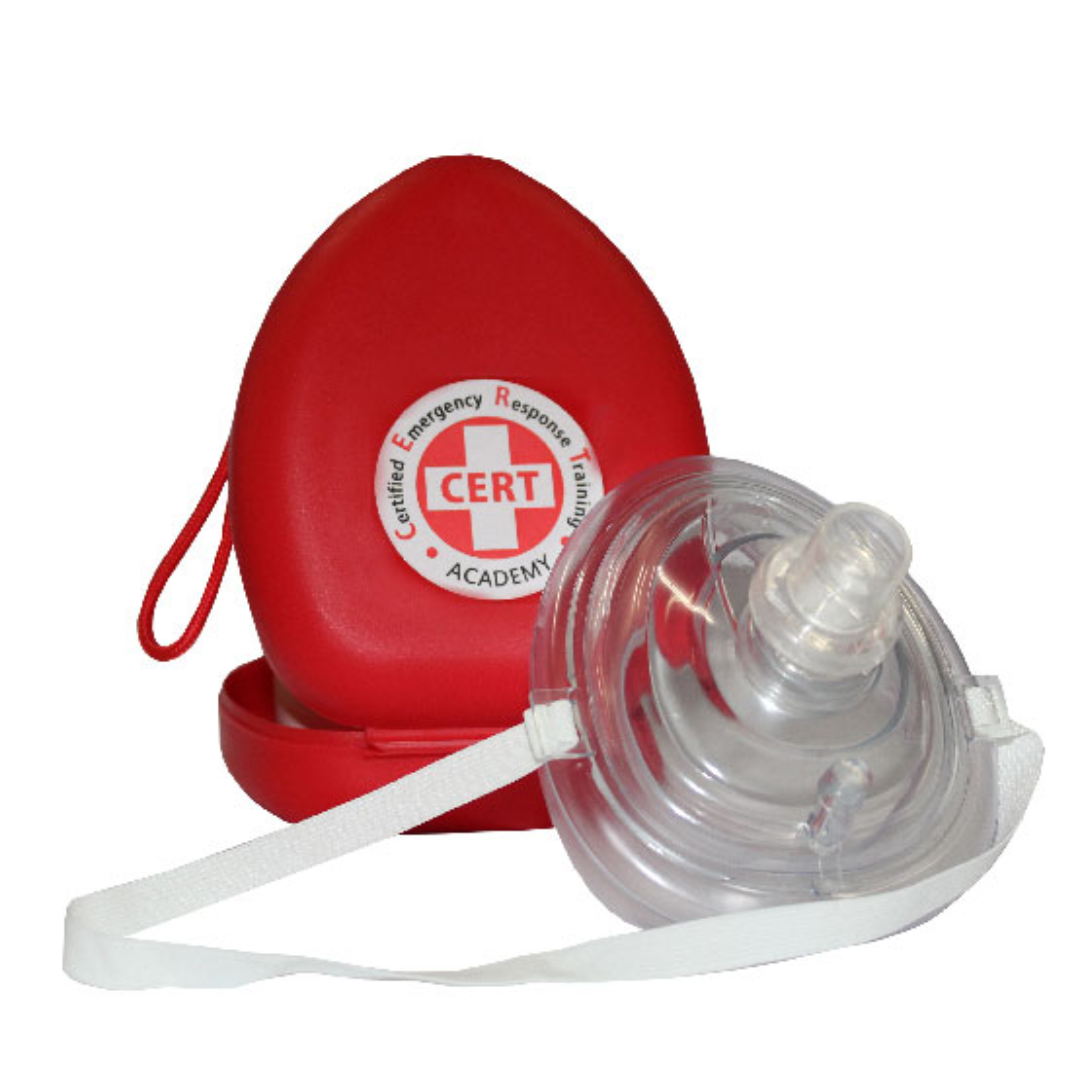
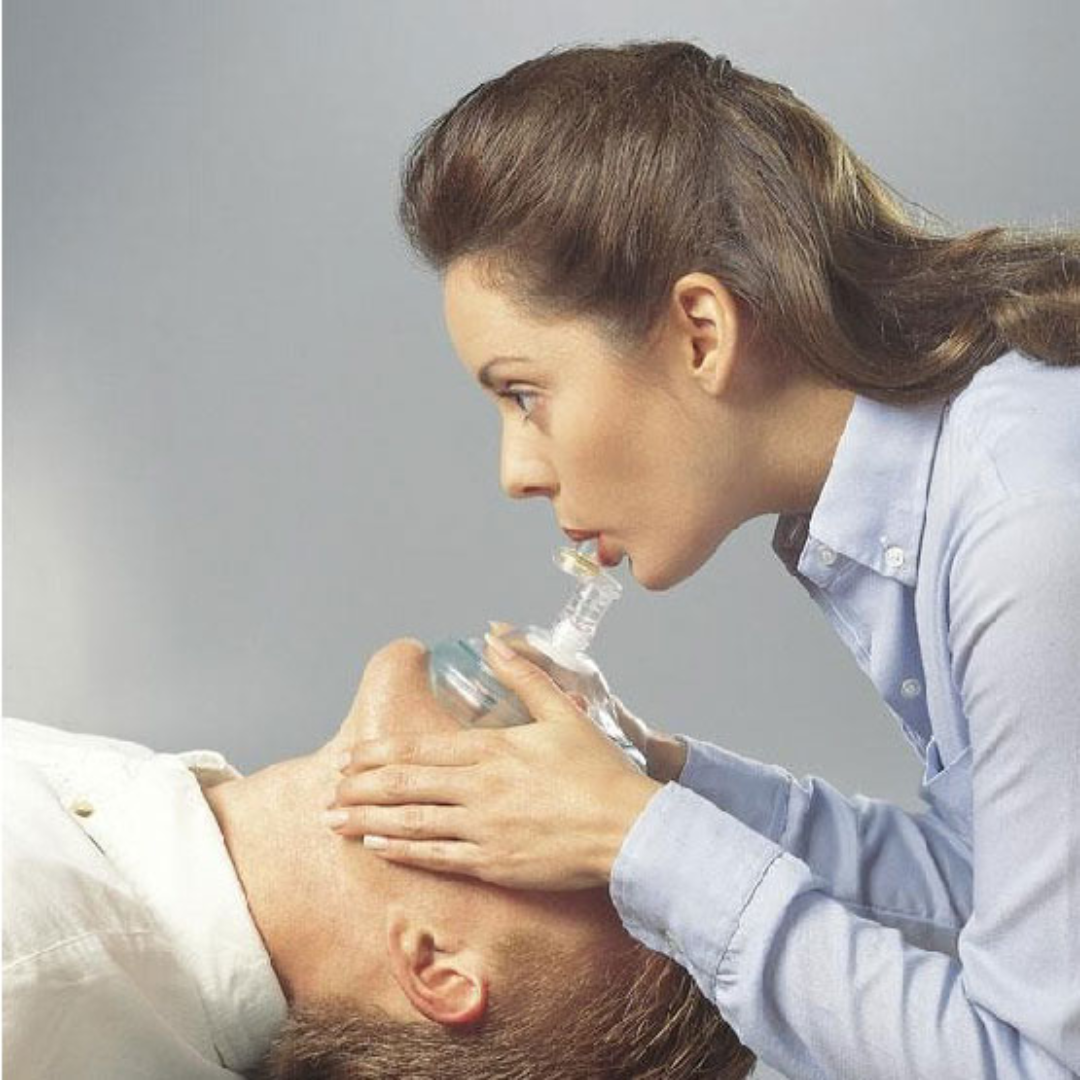
One‑way valve + hydrophobic filter: Allows the rescuer’s exhalation into the patient while blocking backflow of fluids or pathogens—typically >99% bacterial/viral filtering efficacy.
Pre‑inflated soft cuff: Provides a reliable seal on faces of adults, children, or infants—cushioned to reduce air leaks.
Optional O₂ inlet: Connects to oxygen supply, enabling delivery of 50–60% supplemental O₂ versus ~16% ambient air alone.
Portable case/key‑chain pouch: Foldable and pocket‑sized, often stored in hard or soft cases with belt or keychain attachment for instant access.
Latex-free, durable materials: Typically vinyl or nylon; scratch-resistant and able to withstand pressure during use.
See‑through shield: Allows visualization of skin color changes and chest rise, and often comes with orientation cues and bite-block.