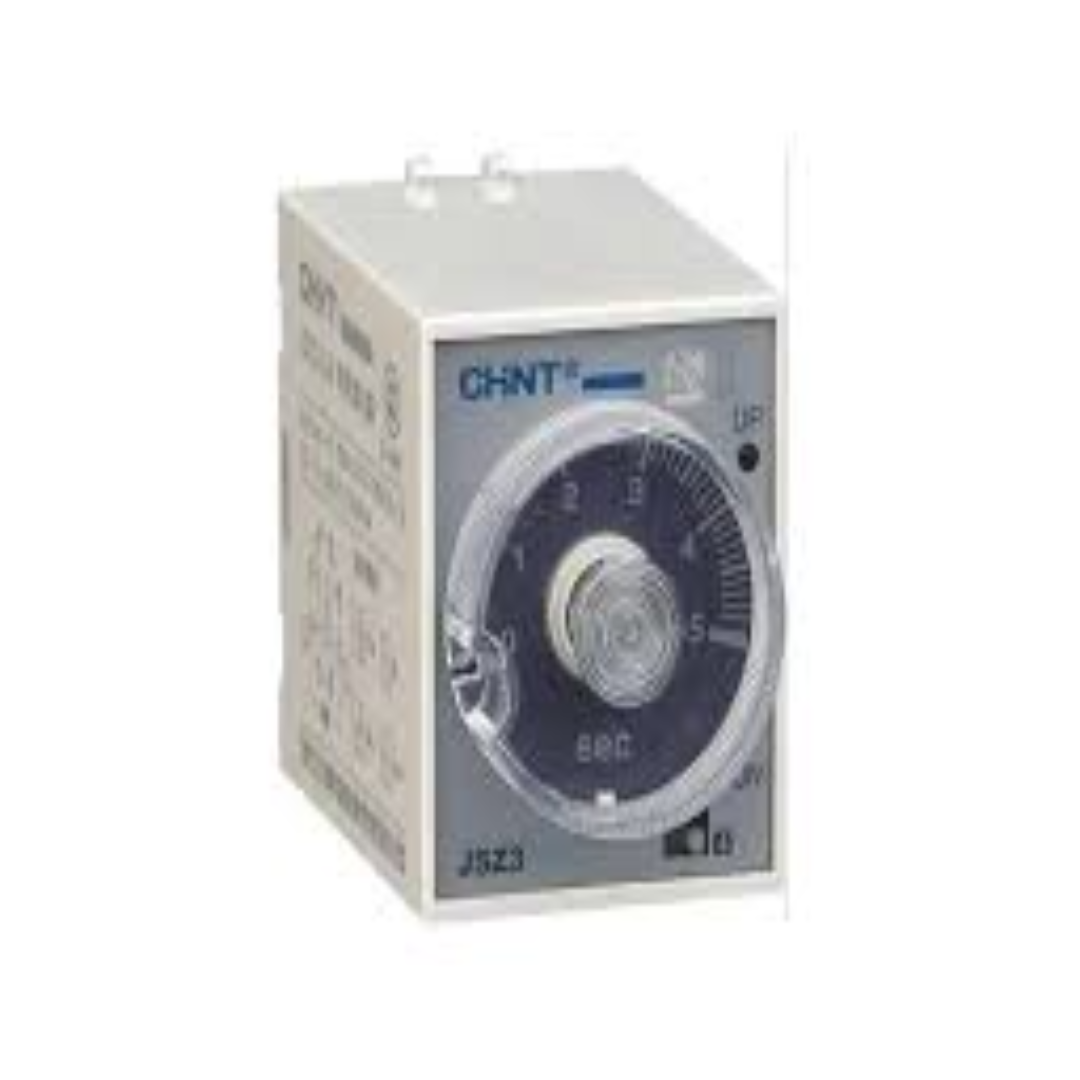
Time-delay relays are specialized relays that provide a controlled delay between the application of an input signal and the operation (energizing or de-energizing) of their contacts. They are designed to introduce a time interval, allowing circuits to switch on or off after a preset delay, rather than instantaneously.
These relays are commonly used in applications such as sequential equipment start-up, motor control, lighting control, heating systems, and protection circuits. Time-delay relays can operate in various modes, including on-delay (contacts operate after a delay when the coil is energized), off-delay (contacts operate a delay after the coil is de-energized), and interval timing (contacts operate for a fixed time period).
They are essential in preventing equipment damage from inrush currents, coordinating sequential operations, and improving system efficiency and safety. Both electromechanical and solid-state versions are available, with solid-state relays offering higher precision and longer life.