
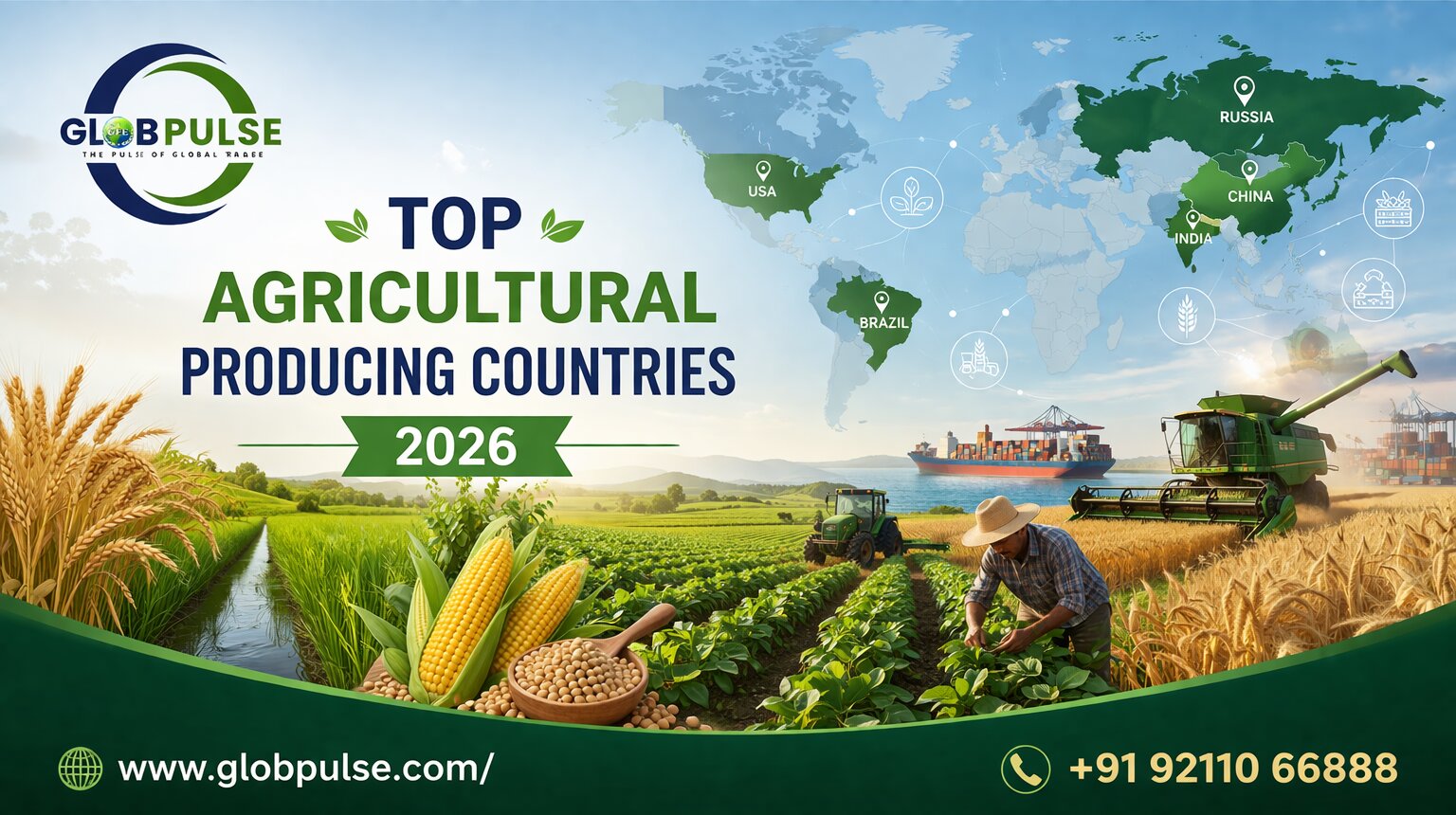
Top 5 Agricultural Producing Countries in the World (2026 Updated Data)
The top 5 agricultural producing countries in the world 2026 are China, India, the United States, Brazil, and Russia. These countries lead global agriculture production due to large farmland, advanced farming technologies, and strong export systems.
Introduction
Agriculture is the backbone of the global economy, supporting billions of people and contributing significantly to GDP, employment, and food security. From the food we consume daily to raw materials used in industries, agriculture plays a crucial role in sustaining life and economies worldwide.
Across the globe, agriculture remains a vital source of livelihood—especially in developing countries, where it is often the primary provider of employment and income. According to the Food and Agriculture Organization (FAO), a remarkable 67% of the world’s population is directly involved in agricultural activities. This sector goes beyond just feeding people: agriculture accounts for nearly 39.4% of the global GDP and makes up 43% of total exports, underscoring its immense contribution not only to national economies, but also to international trade.
In short, the importance of agriculture can’t be overstated: it shapes communities, drives innovation, and forms the foundation for both local and global prosperity.
In this article, we provide a detailed breakdown of the top agricultural producing countries in the world, including production data, rankings, and key insights. If you are searching for the largest agricultural producers in the world 2026, this guide gives you a complete and easy-to-understand overview.
What percentage of the world's population is involved in agriculture?
Global Involvement in Agriculture
So, just how many people across the globe are hands-on in agriculture? According to figures from the Food and Agriculture Organization (FAO), about 67% of the world’s population is connected to agricultural activities in some form. This means that for more than half of humanity, agriculture isn't just a part of the economy—it remains a key source of livelihood, income, and daily sustenance, especially in developing regions.
Whether it’s planting rice in Southeast Asia, herding cattle in South America, or managing high-tech greenhouses in Europe, agriculture shapes the lives of billions and continues to be foundational for communities worldwide.
How Agricultural Production is Measured
You might wonder—how do we determine which countries are the biggest agricultural producers? It’s not just about land size or population. Experts use several metrics, including total production volume, value of agricultural output, and diversity of crops and livestock.
Organizations like the FAO (Food and Agriculture Organization) collect and analyze global agricultural data to rank countries. They consider factors such as crop yield, livestock production, and export value. For example, global agricultural output is often measured in monetary terms at farm-gate prices, giving a clear picture of a country’s contribution.
What are the main types of agricultural production?
Main Types of Agricultural Production
So, what exactly do farms around the world produce? The primary categories of agricultural production are:
- Food: This is the most familiar—think grains, fruits, vegetables, meat, dairy, and eggs, all of which fill our grocery store shelves and kitchen tables.
- Fuel: Crops like corn and sugarcane aren’t just for eating. They’re also grown for biofuel production, powering everything from cars to factories.
- Fiber: Cotton, wool, and hemp are cultivated for clothing, textiles, and other products we use every day.
- Raw Materials: Agriculture also supplies a variety of raw materials used in industrial processes—rubber from rubber trees, oils for manufacturing, and more.
Each of these categories plays a vital role in economies worldwide, shaping what we eat, wear, and even how we power our lives.
Overview of Global Agricultural Production Trends
Key Statistics from FAO and Global Reports
Global agriculture has seen remarkable growth over the past decade. The total harvested area for major crops reached around 1.5 billion hectares by 2024, reflecting a massive expansion in agricultural activity. That’s like covering multiple continents with farmland!
Even more impressive, global production of oil crops increased by 50% between 2010 and 2024, driven largely by soybean and palm oil expansion. These crops are essential not just for food but also for industrial uses like biofuels.
Factors Driving Agricultural Output
So, what’s behind this growth? Several factors play a role:
Advancements in farming technology
Improved irrigation systems
Government subsidies and policies
Global demand for food and biofuels
It’s like upgrading from a bicycle to a high-speed train—modern agriculture is faster, more efficient, and more productive than ever before.
Global Agriculture Trends & Statistics
- Over 1.5 billion hectares of land is used for farming globally—an immense footprint that highlights agriculture’s pivotal role on our planet. In fact, around 11% of the world’s land area is dedicated to crop production, while about 26% is set aside for animal grazing. This vast use of land underscores the scale and significance of agriculture and livestock in shaping our landscapes and sustaining populations worldwide.
- Agricultural production has increased significantly due to rising food demand
- Oil crop production has grown by 50% in the last decade
- Technology like AI and smart farming is improving productivity
👉 These trends highlight the growth of the global agriculture industry
Which other countries are notable agricultural producers worldwide?
Notable Agricultural Producers Worldwide
Beyond the leading players, several other countries stand out for their significant contributions to agriculture. Nations such as France, Mexico, Japan, Germany, and Turkey each boast robust farming sectors, driven by unique climates, crops, and agricultural practices. Their ongoing investments in technology and sustainable methods ensure their place among the world’s top producers, shaping the future of global food supply.
🇨🇳 #1 China – The Global Agriculture Leader
China ranks #1 among the largest agricultural producers in the world.
China stands tall as the world’s largest agricultural producer, contributing the highest value of agricultural output globally—over $1.65 trillion. That’s not just impressive—it’s dominant.
The country produces a wide range of crops, including rice, wheat, corn, soybeans, and vegetables. Rice production alone is massive, feeding billions of people domestically. Despite having only about 7% of the world’s arable land, China manages to feed over 20% of the global population. That’s a staggering feat of efficiency—imagine a country squeezing every last drop of potential out of its farmland. China’s land is heavily used for agriculture, with crops grown not only in fields but along building walls and even in urban spaces. Even though only about 10% to 15% of China’s vast territory is suitable for farming, the country has transformed what it has into a powerhouse of productivity. For perspective, over 545,000 square kilometers of land are irrigated—an area roughly the size of France dedicated to making every harvest count. When it comes to crops, China leads the world in rice production, but its agricultural bounty doesn’t stop there. Major crops also include wheat, corn, soybeans, millet, and sorghum (kaoliang), providing a diverse and resilient food system that feeds billions both at home and abroad.
Technology and Workforce Advantage
China’s success lies in its blend of traditional farming and modern innovation. The country has invested heavily in irrigation, fertilizers, and agricultural technology. With one of the largest agricultural workforces in the world, productivity remains high.
Imagine running a giant machine with millions of parts working in perfect harmony—that’s China’s agricultural system.
🇮🇳 #2 India – The Backbone of Food Security
India is one of the top farming countries in the world 2026.
India ranks second globally, with agricultural output exceeding $524 billion. The country is a leading producer of rice, wheat, sugarcane, cotton, and pulses.
Over the past 14 years, Indian agriculture production has surged from $87 billion to $397 billion, reflecting an impressive 11% annual growth rate. This leap highlights the remarkable transformation underway in the sector—fuelled by technology, improved infrastructure, and a growing focus on efficiency.
Rice is especially significant—India is the second-largest producer globally, just behind China. Additionally, India is a major exporter of basmati rice, spices, and tea.
Role of Small Farmers
What makes India unique is its vast network of small farmers. Unlike the large industrial farms in the U.S., India’s agriculture is driven by millions of small-scale farmers who collectively produce enormous output.
It’s like a massive orchestra where each instrument plays a small part—but together, they create a powerful symphony.
But India's agricultural story doesn’t stop there. The country is the largest producer of many key fruits—including bananas, guava, mango, lemon, and papaya—as well as a wide variety of vegetables, such as chickpeas. When it comes to spices, India is in a league of its own, leading the world in the production of ginger, pepper, and chilli.
This impressive diversity not only supports the nation’s massive population but also fuels global markets with vibrant flavors and essential food staples.
A Diverse Powerhouse
India stands as the world’s largest producer of many fruits—bananas, guava, mango, lemon, papaya—and vegetables like chickpeas. When it comes to spices, India’s reputation is legendary, producing vast quantities of ginger, pepper, and chilli that spice up kitchens around the globe.
The country is also a leader in several other food sectors:
#1 in milk production
#2 in dry fruits
#3 in fish production
#4 in egg production
#5 in poultry
Indian agriculture is incredibly diverse, with animal farming and horticulture together contributing about 60% to the agricultural GDP. It also boasts the largest irrigated area in the world, covering nearly 96 million hectares—making it a global leader in water management for crops.
Steady Growth & Economic Impact
Over the past 14 years, India's agricultural production value soared from $87 billion to $397 billion, reflecting an impressive 11% annual growth rate. Today, agriculture provides livelihoods for around 58% of the Indian population and contributes roughly 17–18% to the country’s GDP. For half of India’s people, it remains the primary source of income.
Role of Small Farmers
What makes India unique is its vast network of small farmers. Unlike the large industrial farms in the U.S., India’s agriculture is driven by millions of small-scale farmers who collectively produce enormous output.
It’s like a massive orchestra where each instrument plays a small part—but together, they create a powerful symphony.
🇺🇸 #3 United States – High-Tech Farming Giant
The United States is a powerhouse of efficiency. With agricultural output around $474 billion, it ranks third globally.
American farms use advanced machinery, GPS technology, and data analytics to maximize yields. Crops like corn, soybeans, and wheat dominate production.
Continual Growth and Productivity
Agriculture in the United States has grown steadily—by 5% every year since 1990. Even more impressive, the productivity of every farming worker has increased by 0.84% annually, reflecting both innovation and relentless drive. This means that year after year, American farmers are not just growing more—they’re growing smarter.
Export Dominance
The U.S. is one of the world’s top exporters of agricultural products, supplying food to countries across the globe. Its ability to produce large quantities with fewer workers sets it apart.
Think of it as a factory—but instead of cars, it produces food.
What is the significance of timber and forest management in U.S. Agriculture?
Forests play a vital—but often overlooked—role in the American agricultural landscape. The U.S. leads the world in timber production, thanks to its vast managed forests and sustainable logging practices. About 70% of U.S. forests are carefully managed and officially owned, allowing for regulated harvesting that balances economic growth with environmental stewardship.
Timber isn’t just about lumber for construction—these forests support rural jobs, wildlife habitats, and even recreational spaces. Thoughtful forest management ensures that the U.S. remains a global leader in producing wood and paper products, all while preserving natural resources for future generations.
It’s agriculture, but with forests swapping fields of corn for stands of pine and oak
🇧🇷 #4 Brazil – Agricultural Export Powerhouse
Brazil is one of the biggest agriculture exporters in the world.
Soybeans, Beef, and Sugarcane Production
Brazil has emerged as a global agricultural giant, especially in exports. It’s the world’s leading exporter of soybeans and beef, and a major producer of sugarcane.
Recent reports show Brazil even surpassed the U.S. in beef production in 2025, highlighting its growing dominance.
Expansion and Innovation
Brazil’s success comes from expanding farmland and adopting innovative farming techniques. Regions like the Cerrado have been transformed into highly productive agricultural zones.
However, this growth also raises environmental concerns, especially regarding deforestation.
What percentage of Brazil's land is used for agriculture?
Land Use in Brazil
A striking feature of Brazil’s agricultural success is the amount of land dedicated to farming. Roughly 41% of the entire country’s territory is utilized for agriculture. With nearly half of Brazil’s vast landscape supporting crops and livestock, it’s clear why the nation stands out as a leading force in global food production.
This extensive land use not only fuels massive harvests of soybeans, beef, and sugarcane, but also drives Brazil’s ability to feed millions—both domestically and through exports.
How much of the world's oranges are produced in Brazil?
Oranges: Brazil’s Citrus Supremacy
Brazil doesn’t just lead in soybeans and beef—the country is also a citrus powerhouse. In fact, Brazil is responsible for producing about one out of every three oranges grown worldwide. This staggering share cements Brazil’s place as the undisputed champion of orange production on the global stage.
🇷🇺 #5 Russia – Emerging Agricultural Leader
Grain Production and Exports
Russia has become a major player in global agriculture, particularly in grain production. It is one of the world’s largest exporters of wheat and barley.
Its vast land area allows large-scale farming, making it a key supplier to global markets. In fact, over 23 million hectares of land are cultivated across the country—about half of that area is dedicated to grain cultivation. Wheat is the most dominant food crop throughout Russia, accounting for 70% of the nation’s total grain output. Alongside wheat, other major cereals include rye, barley, oats, and maize, while sugar beet and potatoes are also widely grown.
Climate and Land Advantage
Russia’s climate and fertile soil give it a natural advantage. As global temperatures change, more land becomes suitable for farming, boosting its production potential. It’s like unlocking new levels in a game—more land means more opportunity.
In recent years, beet production has experienced significant growth as well, further diversifying the country’s agricultural output. With its immense scale, varied climate zones, and increasing adaptation to changing conditions, Russia’s role on the world agricultural stage continues to expand.
Comparison Table of Top 5 Countries
Key Factors That Make These Countries Leaders
Land, Climate, and Resources
The top agricultural countries share one common trait—access to vast land and favorable climates. Fertile soil, adequate rainfall, and diverse ecosystems enable them to grow a wide range of crops.
Technology and Government Policies
Government support plays a huge role. Subsidies, research, and infrastructure investments help farmers increase productivity.
Challenges Facing Global Agriculture
Climate Change and Sustainability
Agriculture faces serious challenges from climate change. Extreme weather, droughts, and floods can disrupt production and threaten food security.
Trade and Economic Risks
Global trade tensions and economic instability also impact agriculture. Supply chains can be disrupted, affecting prices and availability.
Future of Agricultural Production
The future of agriculture looks both promising and challenging. With advancements in AI, precision farming, and biotechnology, productivity is expected to rise. At the same time, sustainability will become a key focus.
Countries will need to balance growth with environmental protection to ensure long-term success.
Conclusion
The world’s top agricultural producers—China, India, the United States, Brazil, and Russia—play a crucial role in feeding the global population. Each country brings unique strengths, whether it’s China’s scale, India’s diversity, or America’s technology.
As global demand continues to rise, these nations will remain at the forefront of agricultural innovation and production.
What are the top agricultural producing countries in the world?
The top agricultural producing countries in the world are China, India, the United States, Brazil, and Russia. These countries lead global farming due to large land areas, advanced technology, and high crop production.
FAQs
1. Which country is the largest agricultural producer in the world?
China is the largest agricultural producer, leading in both output value and crop production.
2. Why is India important in global agriculture?
India produces a wide variety of crops and supports a large portion of the world’s food supply.
3. What makes the U.S. agriculture unique?
The U.S. uses advanced technology and mechanization, making it highly efficient.
4. Why is Brazil growing rapidly in agriculture?
Brazil benefits from vast land, favorable climate, and strong export markets.
5. Is agriculture expected to grow in the future?
Yes, global agricultural production is expected to increase due to rising demand and technological advancements.
6. Which country is number 1 in agriculture production?
China is the largest agricultural producer due to its massive crop production and global food supply.
7. What are the top 5 agricultural producing countries?
China, India, the United States, Brazil, and Russia are the top 5.
8. Why is agriculture important?
Agriculture supports food supply, employment, and economic growth worldwide
If you are searching for the top 5 agricultural producing countries in the world 2026, this guide provides detailed insights into the largest agricultural producers, global rankings, and agriculture trends. These countries dominate global food production and play a crucial role in the global economy.
Explore More Helpful Resources for Your Business Growth
Looking to expand your wholesale network or explore more B2B opportunities? We’ve created detailed guides to help you make smarter business decisions.
If you’re serious about growing your supplier or export business, these articles will give you practical insights, platform comparisons, and market strategies.
👉 Top Agricultural Exporters
https://www.globpulse.com/blog/top-10-biggest-agricultural-exporters-in-the-world-2026
👉 Basmati Rice Export Guide
https://www.globpulse.com/blog/basmati-rice-wholesale-suppliers-india-export👉 Fruit Suppliers India
https://www.globpulse.com/blog/fruit-wholesalers-near-me-india👉 Mango Suppliers India
https://www.globpulse.com/blog/wholesale-mango-suppliers-india-b2b-marketplace-deals